
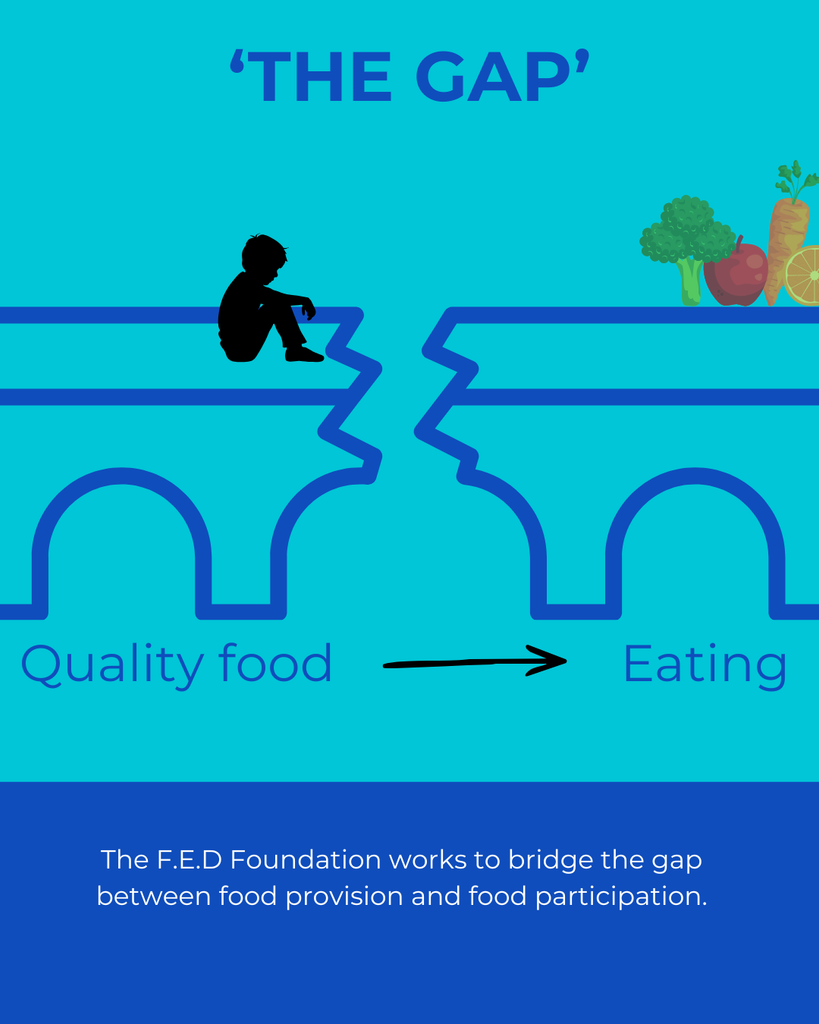
Food may be available. But not every child can benefit from it.
Across schools, communities and public services, significant effort is invested in improving children’s access to food. These initiatives are important and necessary.
Yet for some children, particularly those with special educational needs, medical needs or developmental differences, access to food is not simply a question of availability. Challenges with eating, drinking and feeding development can create barriers to nutrition, learning, inclusion and everyday participation.
As a result, some children remain present but unable to fully benefit from the opportunities around them.
Why are children being left behind?
Because providing food is only part of the picture. We must also understand how children learn the skills that enable them to eat it.
THE MISSING LINK – Feeding Development
Learning to eat is a developmental journey. Just as children develop skills for walking, talking, reading and writing, they also develop the skills needed to learn to eat. These skills influence how children explore food, take part in mealtimes, develop independence and build confidence around eating.
When feeding development follows a different path, children require understanding, adaptation and support in order to participate to their full potential.
This is the issue The Children’s F.E.D. Foundation exists to address.
WHY THIS MATTERS – Food participation opens doors.
When children are able to engage with food in ways that work for them, the benefits extend far beyond the table.

Independence
Developing feeding skills can help children build confidence, autonomy and independence throughout childhood and beyond.

Inclusion
Mealtimes, celebrations and food based activities play an important role in social participation, belonging and school life.

Learning
Children who can take part in food-related learning opportunities are better able to engage with educational experiences and build practical life skills.

Health
Food participation supports children’s ability to access adequate nutrition and develop a lifelong healthy relationship with food.